Pages

Showing posts with label NHS Choices. Show all posts

Thursday, 17 January 2013

Tentative evidence re: Alzheimers prevention - Michael Mosley IF diet

reposted from: http://vimeo.com/50224011, from 4 minutes
crabsallover highlightskey pointscomments / links.

In mice on Intermittent Fasting (IF), Mark P. Mattson found that 'sporadic bouts of hunger trigger new neurons to grow'. 'Why should a brain cell generate new cells when you stop feeding it?' asked Michael Mosley of Mark Mattson (5.30s) :- In evolutionary terms, if when you are hungry, it is good to increase your cognitive ability as this could give a survival advantage eg food, predator and hazard locations. In mice, Mattson found that new brain cells [in the hippocampus] grow more than on restricted calorie diet.

But this is just one researcher with trials on mice. Was this research published in a peer reviewed journal? Has his research been repeated in other labs? We do not know whether this growth of brain cells will happen in humans.

Mark P Mattson said (4.10s) that the evidence was 'very good' to 'excellent' that 'Intermittent Fasting IF could reduce the risk of brain diseases in people like Michael Mosley.'
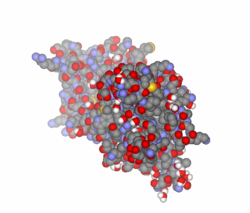
Brain-derived neurotrophic factor
In human terms, putting genetically modified, Alzheimers susceptible mice, on IF means that they develop Alzheimers at 80 rather than at 50 years. Mice on IF diet have increased production of Brain Derived Neurotrophic Factor (BDNF - wikipedia) which stimulates stem cells to turn into new nerve cells in the hippocampus, a part of the brain essential for learning and memory. Research on humans on IF diets, may show, using MRI, that hippocampi size changes. When people exercise (eg walking) the hippocampus size can increase (1). Regular walkers have brains that in MRI scans look, on average, two years younger than the brains of those who are sedentary. (Ref: Michael Mosley & Mimi Spencer, 'The fast diet, The simple secret of Intermittent Fasting: Lose weight, stay healthy, live longer', pub. January 2013 by Short books, pages 44-48)

(1) Erickson, KI; Voss, MW et al, Salk Institute, CA, USA. 'Exercise training increases size of hippocampus and improves memory'. Proceedings of the National Academy of Science USA, January 2011


5-2 Fasting - Excerpts from Michael Mosley's Horizon 'Eat, Fast and Live Longer' from Jon Brewerton on Vimeo.

Michael Mosley (pg 49 in above book) took the cognitive test http://cognitivefun.net/test/2 - the Stroop Test before and after starting the IF and found, purely anecdotally, that his memory had improved.

What is the evidence intermittent fasting prevents cognitive decline?
It seems that all of the studies on the supposed protective effects of IF against conditions that can cause a decline in cognitive function (such as dementia or Alzheimer’s disease) involve animals.
For example, a 2006 study (PDF, 843.1Kb) involved mice that had been genetically engineered to develop changes in brain tissue similar to those seen in people with Alzheimer’s disease.
Mice on an IF diet appeared to experience a slower rate of cognitive decline than mice on a normal diet (cognitive function was assessed using a water maze test).
While the results of these animals tests are certainly intriguing, animal studies have inherent limitations. We can never be sure that the results will be applicable in humans.


Links to the science


Halagappa VKM, Guo Z, Pearson M, et al. Intermittent fasting and caloric restriction ameliorate age-related behavioral deficits in the triple-transgenic mouse model of Alzheimer's disease (PDF, 843.1Kb). Neurobiology of Disease. Published online January 13 2007


Tuesday, 15 January 2013

Does the 5:2 intermittent fasting diet work?

reposted from: http://www.nhs.uk/news/2013/01January/Pages/Does-the-5-2-intermittent-fasting-diet-work.aspx
crabsallover highlightskey pointscomments / links.

For a NHS Choice update published May 2013 see here.

NHS Choices undertook a non-systematic review of IF.

What is the evidence intermittent fasting increases life-span?
"There is quite a wide range of work on the effects of IF on combating the effects of aging, but almost all of these studies involved either rats, mice or monkeys." Only one piece of 1957 IF evidence in humans. 

So don't rely on IF to increase your life-span!

What is the evidence intermittent fasting prevents cognitive decline?
All of the studies on the supposed protective effects of IF against conditions that can cause a decline in cognitive function (such as dementia or Alzheimer’s disease) involve animals. 

So don't rely on IF to prevent cognitive decline!

What is the evidence intermittent fasting prevent diseases?
Much of the published research into the potential preventative effects of IF involve measuring biological markers associated with chronic disease, such as insulin-like growth factor-I (IGF-I) – known to be associated with cancer, do not guarantee successful real-world outcomes. A 2007 clinical review looking at the effects of IF in humans in terms of ‘real-world’ health outcomes concluded that IF (specifically, alternative day fasting) may have a protective effect against heart disease, type 2 diabetes and cancer. However, it concluded ‘more research is required to establish definitively the consequences of ADF (alternative day fasting)’. 

So don't rely on IF to prevent diseases!


Replicated in full from the above NHS Choices review.


Monday January 14 2013


The 5:2 diet is an increasingly popular diet plan with a flurry of newspaper articles and books being published on it in the run up to Christmas 2012 and in January 2013.
The diet first reached the mainstream via a BBC Horizon documentary called Eat, Fast and Live Longer, broadcast in August 2012.
The 5:2 diet is based on a principle known as intermittent fasting (IF) – where you eat normally at certain times and then fast during other times.
The 5:2 diet is relatively straightforward – you eat normally five days a week, and fast on the other two days.

What does a daily 500-calorie diet look like?

A 500 calorie a day diet could consist of one bowl of cornflakes for breakfast, a single sausage for lunch and just one slice of pizza for dinner. And of course, nothing but water to drink all day.
Champions of the 5:2 diet claim that other than helping people lose weight, 5:2 diet can bring other significant health benefits, including:
  • increased life-span
  • improved cognitive function and protection against conditions such as dementia and Alzheimer’s disease
  • protection from disease
However there is no peer-reviewed evidence that the 5:2 diet can bring these benefits, and only a very limited evidence base for IF in general.

What we don’t know about intermittent fasting

Despite its increasing popularity, there is a great deal of uncertainty about IF with significant gaps in the evidence.
For example, it is unclear:
  • what pattern of IF is the most effective in improving health outcomes – 5:2, alternative day fasting, or something else entirely different
  • what is the optimal calorie consumption during the fasting days – the 5:2 diet recommends 500 calories for women and 600 for men, but these recommendations seem arbitrary without clear evidence to support them
  • how IF compares to conventional calorie-controlled diets in terms of leading to weight-loss and improving health
  • how sustainable is IF in the long-term – would most people be willing to stick with the plan for the rest of their lives?

Are there any side-effects from intermittent fasting?

Little is known about possible side-effects as no systematic attempt has been made to study this issue. Anecdotal reports of effects include:
  • difficulties sleeping
  • bad breath (a known problem with low carbohydrate diets)
  • irritability
  • anxiety
  • dehydration
  • daytime sleepiness
However, more research would be needed to confirm these side-effects and their severity.
If you are fasting, you may want to think about how fasting will impact on your life during your fasting days. You are likely to be very hungry and have less energy and this could affect your ability to function (such as at work), in particular it may affect your ability to exercise which is an important part of maintaining a healthy weight.
Also, IF may not be suitable for pregnant women and people with specific health conditions, such as diabetes, or a history of eating disorders.
Because it is a fairly radical approach to weight loss, if you are considering trying IF for yourself, it is wise to speak to your GP first to see if it is safe to do so.

What do we know?

There does not appear to be any research evidence that looks directly at the 5:2 diet.
There is some degree of evidence about the potential benefits of other forms of IF – albeit with some significant limitations.
It should be stressed that our assessment of the evidence was confined to entering a number of keywords into Google Scholar and then looking at a small number of studies which we felt would be useful to explore further.
We did not carry out a systematic review (though arguably, it would be useful for researchers to do so). So the information provided below should be taken in the spirit of us trying to provide an introduction to some of the evidence and science of IF – not an exhaustive 'last word' on the topic.

Is there any evidence that intermittent fasting aids weight-loss?
One of the most recent pieces of research on intermittent fasting is a 2012 study (PDF, 291.4Kb) which recruited 30 obese women known to have pre-existing risk factors for heart disease.
After an initial two week period they were then given a combination diet of low calorie liquid meals for six days of a week (similar to Slim Fast diet products) and then asked to fast for one day a week (comsuming no more than 120 calories).
After eight weeks, on average, the women lost around 4kg (8.8lb) in weight and around 6cm (2.3 inches) off their waist circumference.
However, there are a number of limitations to consider when looking at this as evidence that it might be a generally beneficial thing to do for most ordinary people, including that:
  • These women may have had increased motivation to stick with the diet because they knew their weight would be monitored (this is a psychological effect that slimming clubs make use of).
  • The women had been told that they were at risk of heart disease. It is uncertain how well most of us would cope with such as extreme diet.
  • The follow-up period was short – just two months. It is not clear whether this diet would be sustainable in the long-term or whether it could cause any side effects.
  • 30 people is quite a small sample size. A much larger sample – including men – is required to see if intermittent fasting would be effective in most overweight or obese people.

Is there any evidence intermittent fasting increases life-span?
There is quite a wide range of work on the effects of IF on combating the effects of aging, but almost all of these studies involved either rats, mice or monkeys. One big problem with studies in animals – particularly rodents – is that they are only expected to live for a few years, this makes them ideal subjects for longevity studies. However, to carry out similar, more useful experiments in humans, requires decades-long research to gain credible results.
In an unsystematic look at the evidence, we find only one study involving humans: a 2006 review (PDF, 64.7Kb) of an experiment actually carried out in 1957 in Spain.
In this 1957 study, 120 residents of an old people’s home were split into two groups (it is unclear from the study whether this was done at random). The first group (the control group) ate a normal diet. The second group (the IF group) ate a normal diet one day and then a restricted diet (estimated to be around 900 calories) the next.
After three years there were 13 deaths in the control group and only six deaths in the IF group.
This study is again limited by the small sample size meaning that the differences in death are more likely to be the results of a statistical fluke. Also, many experts would feel uneasy about issuing dietary guidelines based on a study over half a century old with unclear methods. It is unlikely that this experiment could be repeated today – denying food to elderly people in residential care is unlikely to be looked at kindly by an ethics committee.

Is there any evidence intermittent fasting prevents cognitive decline?
It seems that all of the studies on the supposed protective effects of IF against conditions that can cause a decline in cognitive function (such as dementia or Alzheimer’s disease) involve animals.
For example, a 2006 study (PDF, 843.1Kb) involved mice that had been genetically engineered to develop changes in brain tissue similar to those seen in people with Alzheimer’s disease.
Mice on an IF diet appeared to experience a slower rate of cognitive decline than mice on a normal diet (cognitive function was assessed using a water maze test).
While the results of these animals tests are certainly intriguing,animal studies have inherent limitations. We can never be sure that the results will be applicable in humans.

Is there any evidence intermittent fasting prevent diseases?
Much of the published research into the potential preventative effects of IF involve measuring biological markers associated with chronic disease, such as insulin-like growth factor-I (IGF-I) – known to be associated with cancer.
Using these kinds of biological surrogates is a legitimate way to carry out research, but they do not guarantee successful real-world outcomes.
For example, some medications that were found to lower blood-pressure readings taken in laboratory conditions failed to prevent strokes once they had been introduced for use in the healthcare of patients in the world.
2007 clinical review (PDF, 118.6Kb) looking at the effects of IF in humans in terms of ‘real-world’ health outcomes concluded that IF (specifically, alternative day fasting) may have a protective effect against heart disease, type 2 diabetes and cancer. However, it concluded ‘more research is required to establish definitively the consequences of ADF (alternative day fasting)’.
   

Conclusion

Due to the very real uncertainties about the 5:2, especially as little is known about whether it could be harmful to health in the long-term, most health professionals would recommend you stick to the tried and trusted methods for weight loss and disease prevention:
Find recommended, simple, low cost ways to lose weight in theLive Well: lose weight pages.

Links to the headlines (January 2013)

The power of intermittent fasting. BBC News, August 5 2012

Links to the science (January 2013)

Varady KA, Hellerstein MK, et al. Alternate-day fasting and chronic disease prevention: a review of human and animal trials (PDF, 118.6KB). American Journal of Clinical Nutrition. Published online 2007     

Saturday, 20 November 2010

What is Behind the Headlines at NHS Choices?

reposted from: http://www.nhs.uk/news/Pages/SirMuirGraysBiography.aspx

Sir Muir Gray, chief knowledge officer of the NHS

Behind the Headlines provides an unbiased and evidence-based analysis of health stories that make the news.
The service is intended for both the public and health professionals, and endeavours to:
  • explain the facts behind the headlines and give a better understanding of the science that makes the news,
  • provide an authoritative resource for GPs which they can rely on when talking to patients, and
  • become a trusted resource for journalists and others involved in the dissemination of health news.
Behind the Headlines is the brainchild of Sir Muir Gray, chief knowledge officer of the NHS and a lifelong advocate of patient empowerment.
“Scientists hate disease and want to see it conquered," said Sir Muir. "But this can lead to them taking an overly optimistic view of their discoveries which is often reflected in newspaper headlines.
“Our service has more time to examine the science behind the stories. Independent experts check the findings and assess the research methods to provide a more considered view." 

'In the 21st century, knowledge is the key element to improving health. In the same way that people need clean, clear water, they have a right to clean, clear knowledge'
Sir Muir Gray
Sir Muir Gray has worked in public health for 35 years. He helped pioneer Britain's breast and cervical cancer screening programmes and was knighted in 2005 for the development of the foetal, maternal and child screening programme and the creation of the National Library for Health.
He is currently director of the National Knowledge Service and responsible for the National Library for Health.

How our system works

  • Each day the NHS Choices team selects health stories that are making headlines.
  • These, along with the scientific articles behind the stories, are sent to Bazian, a leading provider of evidence-based healthcare information.
  • Bazian's clinicians and scientists analyse the research and produce impartial evidence-based assessments, which are edited and published by NHS Choices.

Services

Behind the Headlines aims to respond to news stories the day they appear in the media.
A daily e-mail service alerting users to new appraisals will be available in the near future.
Behind the Headlines is also available in RSS format, and XML feeds for web publishers wishing to carry the service on their own sites will soon be made live.

Tomato juice and osteoporosis

Tomatoes have especially high
levels of lycopene
Tomato juice and osteoporosis - Health News - NHS Choices
“Two glasses of tomato juice a day strengthens bones and can ward off osteoporosis,” The Daily Telegraph reported. It said scientists have found that an ingredient in the drink, called lycopene, slows down the breakdown of bone cells, protecting against the disease. This news story is based on a small pilot study that compared the effects of lycopene supplements and tomato juice on chemical signs of bone loss in postmenopausal women. Women taking lycopene from either juice or pills had lower levels of the chemical by-product associated with osteoporosis. The findings of this study highlight an avenue for further research. However, it is too soon to conclude that tomato juice will help fight bone disease. The researchers, though optimistic, make it clear that their study is a pilot and that larger studies that measure actual bone loss or fractures, rather than the signs of the disease, will provide better evidence.

Lycopene

crabsallover calculates '340mls a day of Heinz Canada Tomato Juice has 30mg Lycopene', an antioxidant (ψ,ψ-carotene)

crabsallover says 'Drinking tomato juice might reduce risk of osteoporosis especially if you are a post menopausal woman'

Lycopene is a symmetrical tetraterpene assembled from 8 isoprene C5Hunits. It is a member of the carotenoid family of compounds, and because it consists entirely of carbon and hydrogen C40H56, is also a carotene.

Fulltext 2010 research.
Earlier research research - Osteoporos Int (2007) 18:109–115

Oxidative stress induced by reactive oxygen species (ROS) is associated with the risk of osteoporosis, and can be reduced by certain dietary antioxidants. Lycopene is an antioxidant known to decrease the risk of
age-related chronic diseases, such as cancer. However, the role of lycopene in osteoporosis has not yet been
investigated. ... Cellular studies have shown that lycopene inhibited ROS production and the formation and activity of osteoclasts [10], and stimulated alkaline phosphatase activity in osteoblasts [11, 12]. These data, together with the known beneficial effects of antioxidants on age-related chronic diseases, strongly suggest that lycopene would be beneficial in reducing the risk of postmenopausal osteoporosis, owing to its potent antioxidant capacity.... Osteoporosis is a major metabolic bone disease characterized by low bone mass and deterioration of the microarchitecture of bone that results in an increased risk of fracture [1]. Postmenopausal osteoporosis occurs primarily among women over the age of 50 because of the loss of estrogen at menopause. High levels of bone turnover markers predict bone loss and the risk of osteoporosis in postmenopausal women [2]. There is an overall marked increase in bone turnover postmenopause, with resorption exceeding formation [3, 4]. Thus, estrogen deficiency associated with menopause can increase the loss of trabecular bone by as much as 5% per year, in so called fast bone losers [5, 6].