Pages

Showing posts with label omega-3 fatty acids. Show all posts

Saturday, 17 August 2013

Oily fish may reduce risk of rheumatoid arthritis - Health News - NHS Choices


reposted from: Oily fish may reduce risk of rheumatoid arthritis - Health News - NHS Choices
crabsallover highlightskey pointscomments / links.

"Eating fish could halve risk of arthritis" is the encouraging news in The Guardian, as a Swedish study found that women who regularly ate high levels of oily fish were less likely to develop rheumatoid arthritis.

This seem to strengthen the Government advice to eat one portion of oily fish and one portion of white fish a week: 'A healthy diet should include at least two portions of fish a week, including one of oily fish.'

Researchers asked women about their diet at two time points a decade apart to assess their intake of long-chain n-3 polyunsaturated fatty acids (omega-3 fatty acids). The researchers then followed up the women six years after their diet was last assessed to see if they had developed rheumatoid arthritis. They found that women whose dietary intake of omega-3 fatty acids consistently exceeded 0.21g per day at both time points had a 52% decreased risk of rheumatoid arthritis compared with women who consistently reported a dietary intake of 0.21g per day or less.

This corresponds to at least one serving of oily fish a week, or four servings a week of lean fish, such as cod. However, the way this study was carried out means that it can't prove that eating fish directly prevented women developing rheumatoid arthritis. Despite this, there are many health benefits from regularly eating oily fish, including a reduced risk of cardiovascular disease.

What were the basic results?


An intake of n-3 PUFAs of more than 0.21g per day (reported on the food frequency questionnaire in 1997) was associated with a 35% decreased risk of developing rheumatoid arthritis compared with a lower intake (adjusted relative risk [RR] 0.65; 95% confidence interval [CI] 0.48-0.90). The researchers calculated that 28% of rheumatoid arthritis cases could be avoided if everyone had an intake of more than 0.21g n-3 PUFAs per day. They also found that higher dietary intakes of n-3 PUFAs further reduced the risk of rheumatoid arthritis until an intake of 0.35g per day was reached. After this level, no additional benefit was seen with a higher intake. When women consistently reported an intake exceeding 0.21g per day (both in 1987 and 1997), this was associated with a 52% (95% CI 29-67%) decreased risk of rheumatoid arthritis compared with women who consistently reported a dietary intake of 0.21g per day or less.

How did the researchers interpret the results?


The researchers conclude that in this study, they have observed a "statistically significant inverse association between intake of dietary long-chain n-3 polyunsaturated fatty acids and rheumatoid arthritis". They go on to suggest that "moderate consumption of fish is sufficient to reduce risk of diseases".

Conclusion


This is a well-designed cohort study that found an association between an increased dietary intake of long-chain n-3 polyunsaturated fatty acids and a reduced risk of rheumatoid arthritis in a cohort of middle-aged and older women in Sweden. This study has many strengths, including: it was prospective, meaning that information was collected as the study was being performed it used a large sample of women taken from the general population diet was assessed at two time points, both long before rheumatoid arthritis was diagnosed But because this is a cohort study, we cannot conclude from its results that dietary long-chain n-3 polyunsaturated fatty acids are directly responsible for the reduction in risk seen. This is because of the confounding factors that could also potentially be responsible for the association seen. Although the researchers adjusted their analyses for the lifestyle factors of smoking and alcohol intake, which are associated with the risk of rheumatoid arthritis, it is possible that people who eat a healthier diet that includes more fatty acids could also have other healthy lifestyle behaviours. This could include having a healthier diet overall (such as a diet with plenty of fruit and vegetables and low in saturated fats) and taking more regular exercise. In addition, this study provides no information about whether dietary intake of long-chain n-3 polyunsaturated fatty acids is associated with a reduced risk of rheumatoid arthritis in men or younger women. Further studies are required to confirm whether long-chain n-3 polyunsaturated fatty acids really do reduce your risk of developing rheumatoid arthritis. However, it is currently recommended that people should aim to eat at least two portions of fish a week, including one portion of oily fish. Babies, children and women who are pregnant, breastfeeding or planning to have children should have no more than two portions of oily fish a week. Eating this amount of fish would provide more than 0.21g of long-chain n-3 polyunsaturated fatty acids, which was the level associated with a reduction in the risk of developing rheumatoid arthritis.

Sunday, 30 December 2012

Crabsallover Lipid & Cholesterol levels

Crabsallover tests: 
November 2006 / 25 November 2008 / 15 July 2010 / 26 January 2011 / 3 November 2011

Crabsallover Serum cholesterol: 
5.1mmol/L, 4.7mmol/L / 5.6mmol/L / 3.5mmol/L / 6.1mmol/L
Conclusion: trend is negative, aim to decrease serum cholesterol by 30% from 5.6 to <3.9mmol/L (target me 26 January 2011) but increased to 6.1mmol/L 3 November 2011

Crabsallover Serum triglycerides: 
Not tested 2.2 mmol/L / 1.5mmol/L (range: 0.5-2.3) / 1.0mmol/L / 2.0mmol/L
Conclusion: trend is positive but aim to decrease triglycerides 26% from 1.5 to <1.1mmol/L


Crabsallover Serum  HDL cholesterol: 
Not tested / 1.18 mmol/L / 1.35mmol/L ./ 1.09mmol/L / 1.4mmol/L
Conclusion: trend is positive but aim to increase HDL 15% from 1.35 to >1.55 mmol/L (@ 15 July 2010)

Crabsallover Serum LDL cholesterol: 
Not tested 2.5 mmol/L / 3.6mmol/L / 2.00mmol/L / 3.8mmol/L
Conclusion: trend is negative for LDL cholesterol, 3.6-3.8mmol/L are borderline high levels - aim for 50% decrease to <1.8mmol/L ie reduce by ~ 2mmol/L @ 3 November 2011

Crabsallover Serum cholesterol/HDL ratio: 
Not tested / 4.0 / 4.1 / 3.2 / 4.4
Conclusion: Lower serum cholesterol/HDL ratio by 27% from 4.1 to 3 - reduce total cholesterol and/or increase HDL @ 15 July 2010.


Overall Lipid & Cholesterol Conclusions: 
Reduce serum cholesterol, triglycerides and LDL cholesterol levels by 30%, 26% and 50% respectively. Increase HDL cholesterol levels by 15% @ 15 July 2010


Tactics
HeartUK pdf (accessed 30 December 2012)
  • Analyse & reduce / change fats eaten
    • reduce total amount of fat eaten
      • grilled chicken breast without skin contains third less saturated fat than with skin
    • reduce saturated fats (increases LDL cholesterol & risk of narrowed arteries)
      • butter, hard cheese, fatty meat, cream, lard, suet, ghee, coconut oil and palm oil.
    • replace saturated fats with unsaturated fats (lowers LDL & serum cholesterol) 
      • polyunsaturated fats (lowers serum cholesterol & blood triglycerides)
        • Oily fish provides polyunsaturated omega-3 fats 
          • 1.2g omega-3 fats / 100g pilchards
          • omega-3 fats reduces: carotid artery thickness, triglyercides, coronary incidents; increases HDL & reduces LDL cholesterol
      • monounsaturated fats (lowers LDL cholesterol whilst maintaining HDL cholesterol)
        • olive / rapeseed / corn oils
        • nuts and seeds
        • some margarines and spreads
        • cheeses low in fat & saturated fat: cottage cheese, ricotta & half-fat cheddar. 
  • consider Statins if diet modification does not work in a year
Serum Cholesterol

HeartUK
Guidelines for cholesterol levels have been set for healthy people and for those at high risk. High risk means someone with existing heart disease, high blood pressure, diabetes or with a family history of early heart disease. 
Recommendations for Healthy Adults Total cholesterol 5 mmol/l or less
Recommendations for High Risk Adults 4 mmol/l or less
http://www.heartuk.org.uk/index.php?/healthy_living/cholesterol_made_simple/

NHS
The government recommends that cholesterol levels should be less than 5mmol/L.
In the UK, two out of three adults have a total cholesterol level of 5mmol/L or above. On average, men in England have a cholesterol level of 5.5mmol/L and women have a level of 5.6mmol/L. The UK population has one of the highest average cholesterol concentrations in the world.
http://www.nhs.uk/Conditions/Cholesterol/Pages/Introduction.aspx

To convert mg/dl of HDL or LDL cholesterol to mmol/l, divide by 39.
http://www.faqs.org/faqs/diabetes/faq/part1/section-9.html

labtestsonline.org.uk
If you are taking treatment to lower your cholesterol, the target is to lower your total cholesterol to <4 mmol/L (156mg/dl), with a fall of around 20-25%.
http://www.labtestsonline.org.uk/understanding/analytes/cholesterol/test.html#what

www.heart.org
Less than 200 mg/dL = 5.1mmol/L = Desirable level that puts you at lower risk for coronary heart disease. A cholesterol level of 200 mg/dL or higher raises your risk.
200 = 5.1mmol/L to 239 mg/dL = 6.1 mmol/L = Borderline high
240 mg/dL = 6.1mmol/L and above High blood cholesterol. A person with this level has more than twice the risk of coronary heart disease as someone whose cholesterol is below 200 mg/dL.
http://www.heart.org/HEARTORG/Conditions/Cholesterol/AboutCholesterol/What-Your-Cholesterol-Levels-Mean_UCM_305562_Article.jsp

Serum Triglycerides
crabsallover History: http://crabsalloverhealth.blogspot.com/2010/06/crabsallover-lipid-cholesterol-levels.html

high triglyceride level combined with low HDL cholesterol or high LDL cholesterol seems to speed up atherosclerosis (the buildup of fatty deposits in artery walls). Atherosclerosis increases the risk for heart attack and stroke.
1.5mmol/L x 89 = 133.5 mg/dL
To convert mmol/l of triglycerides to mg/dl, multiply by 89.
http://www.faqs.org/faqs/diabetes/faq/part1/section-9.html
www.heart.org
Less than 150 mg/dL = 1.68mmol/L =Normal
150–199 mg/dL Borderline high =A triglyceride level of 150 mg/dL or higher is one of the risk factors of metabolic syndrome. Metabolic syndrome increases the risk for heart disease and other disorders, including diabetes.
200–499 mg/dL High
500 mg/dL and above Very high
The mean level of triglycerides for American adults age 20 and older is 144.2 mg/dl (1.6mmol/L)
http://www.heart.org/HEARTORG/Conditions/Cholesterol/AboutCholesterol/What-Your-Cholesterol-Levels-Mean_UCM_305562_Article.jsp

No figures cited: 
http://www.labtestsonline.org.uk/understanding/analytes/triglycerides/test.html#what

Serum HDL cholesterol

HeartUK
Guidelines for cholesterol levels have been set for healthy people and for those at high risk. 
Recommendations for Healthy Adults HDL cholesterol: Men – above 1.0 mmol/l
http://www.heartuk.org.uk/index.php?/healthy_living/cholesterol_made_simple/

Labtestsonline.org.uk: High levels of HDL cholesterol are better than low HDL cholesterol.  The higher your HDL cholesterol level, the lower risk of developing heart disease. There are two ways that HDL cholesterol values are interpreted—as a percent of total cholesterol or as a measured value.  Measured Value: If HDL cholesterol is less than 1.0 mmol/L in men there is an increased risk of heart disease. A desirable level of HDL is greater than 1.0 mmol/L for men and is associated with average risk of heart disease. A good level of HDL is 1.5 mmol/L or more and is associated with a less than average risk of heart disease.
http://www.labtestsonline.org.uk/understanding/analytes/hdl/test.html#what

To convert mg/dl of HDL or LDL cholesterol to mmol/l, divide by 39.
http://www.faqs.org/faqs/diabetes/faq/part1/section-9.html
www.heart.org
HDL Cholesterol Level Category
Less than 40 mg/dL (for men) = Low HDL cholesterol. A major risk factor for heart disease.
60 mg/dL and above = High HDL cholesterol. An HDL of 60 mg/dL and above is considered protective against heart disease.

With HDL (good) cholesterol, higher levels are better. Low HDL cholesterol (less than 40 mg/dL for men, less than 50 mg/dL for women) puts you at higher risk for heart disease. In the average man, HDL cholesterol levels range from 40 to 50 mg/dL. In the average woman, they range from 50 to 60 mg/dL. An HDL cholesterol of 60 mg/dL or higher gives some protection against heart disease. The mean level of HDL cholesterol for American adults age 20 and older is 54.3 mg/dL.
Smoking, being overweight and being sedentary can all result in lower HDL cholesterol. To raise your HDL level, avoid tobacco smoke, maintain a healthy weight and get at least 30-60 minutes of physical activity more days than not.
People with high blood triglycerides usually also have lower HDL cholesterol and a higher risk of heart attack and stroke. Progesterone, anabolic steroids and male sex hormones (testosterone) also lower HDL cholesterol levels. Female sex hormones raise HDL cholesterol levels.
http://www.heart.org/HEARTORG/Conditions/Cholesterol/AboutCholesterol/What-Your-Cholesterol-Levels-Mean_UCM_305562_Article.jsp

Serum LDL Cholesterol
HeartUK
Guidelines for cholesterol levels have been set for healthy people and for those at high risk. 
High risk means someone with existing heart disease, high blood pressure, diabetes or with a family history of early heart disease.
Recommendations for Healthy Adults LDL cholesterol  3 mmol/l or less
Recommendations for High Risk Adults LDL cholesterol: 2 mmol/l or less
http://www.heartuk.org.uk/index.php?/healthy_living/cholesterol_made_simple/

labtestsonline.org.uk: Elevated levels of LDL indicate risk for heart disease. Treatment (with diet or drugs) for high LDL aims to lower LDL to a target value of less than 3 mmol/L.
This is especially important if you have other risk factors for heart disease. Risk factors include cigarette smoking, hypertension, low HDL (< 1 mmol/L), family history, age (male 55 or older; female 65 or older), being overweight, and failure to exercise regularly.
http://www.labtestsonline.org.uk/understanding/analytes/ldl/test.html#what

“Bad” LDL cholesterol is seen as being worryingly high at 7 mmol/l, more healthy: 4.4mmol/l.  Optiimal: 1 to 3 mmol/L
http://crabsalloverhealth.blogspot.com/2010/11/benefits-of-high-doses-of-statins.html

UK Government advises  LDL should be <3mmol/L
http://www.nhs.uk/Planners/NHSHealthCheck/Pages/Healthycholesterol.aspx

To convert mg/dl of HDL or LDL cholesterol to mmol/l, divide by 39.
http://www.faqs.org/faqs/diabetes/faq/part1/section-9.html

Serum Total Cholesterol to HDL ratio
Labtestsonline.org.uk: High levels of HDL cholesterol are better than low HDL cholesterol.  The higher your HDL cholesterol level, the lower risk of developing heart disease. There are two ways that HDL cholesterol values are interpreted—as a percent of total cholesterol or as a measured value.  
Percent: If HDL is 20% of the total cholesterol, the risk of heart disease is average. If HDL is more than 20% of the total cholesterol, the risk of heart disease is less than average. This is usually expressed as a ratio of cholesterol to HDL. It is desirable for the cholesterol/HDL ratio to be less than 5.
http://www.labtestsonline.org.uk/understanding/analytes/hdl/test.html#what

Saturday, 25 December 2010

Bowel cancer fish oil and aspirin treatment study

reposted from: http://www.bbc.co.uk/news/uk-england-leeds-11380159
links / comments in blue are by crabsallover


Faecal Occult Blood test FOBt (Bupa) - Bowel Cancer test explained
NHS bowel cancer screening website for England
- NHS Bowel Cancer Screening Programme offers screening every 2 years to all men and women aged 60 to 69 (on request up to 75)
- Screening Pathway
Predicted outcomes of bowel cancer screening
- EPIC (European Prospective Investigation into Cancer) study found risk of colorectal polyps / cancer reduces if:

  • diet high in fibre (mostly in fruit, vegetables and cereals (inc. flour & bread))
  • eat small amounts of red meat
    • lamb, pork, veal and beef
  • eat small amounts of processed meat
    •  sausages, salami, ham, bacon, paté, corned beef
  • eat fish
  • diet high in calcium
    • >1.3g / day equiv. 2 pints of milk or 4 pots yoghurt
  • < 12.5 units of alcohol per week
    • 1 unit = 10mls of 100% alcohol. Formula.
  • healthy weight
    • overweight men 25% increased risk; obese men 50% increased risk
  • physically active
    • 50% lower with regular exercise
  • take daily aspirin
  • vitamin D
  • bowel cancer screening
    • 25% lower risk when tested with FOBt


END crabsallover links


Bowel cancer cell
Bowel cancer is the third most common form of cancer in the UK
A major study is to be carried out to find out whether taking two pills a day - containing fish oil and aspirin - could help prevent bowel cancer.

see University of Leeds Press Release.
About Mark Hull
About 1,000 people are to be recruited from the NHS Bowel Cancer Screening Programme (BCSP) in England to take part in the research.
The study, led by the University of Leeds, will look at the pills' effects.
The trial is expected to begin in April or May 2011 and up to 30 English hospitals in will be involved.
Protective effect
Bowel cancer is the world's third most common cancer, with more than a million new patients being diagnosed each year.
In most cases, the cancer develops from tiny, slow-growing nodules on the bowel wall, known as polyps.
Previous studies have shown that a substance found naturally in fish oil known as eicosapentaenoic acid (EPA) and aspirin can each, taken on their own, provide some protection against bowel polyps.
"Taken together, the protective effect may be even greater, as researchers now intend to find out," said Leeds University's Professor Mark Hull, who is leading the trial.
'Major advantage'
If effective pills could be found, patients at risk of developing the growths would need far fewer check-ups.
"A major advantage of EPA and aspirin is that they are both safe, have few side effects and they are already used widely by people who have heart disease or who have had a stroke," said Prof Hull.
"Other drugs that have been shown to prevent bowel polyps have been linked to an increase in heart attacks, so they are unsuitable for widespread use.
"If this treatment is shown to be safe and effective, then in future it could be given to more patients who have been found to have these pre-cancerous bowel polyps and are at risk of developing others in the future."
Researchers from the universities of Leeds, Bradford and Nottingham, and South Tyneside and Gateshead NHS Foundation Trusts, will be working with doctors and nurses from the BCSP on the trial.

More on This Story

Related stories

Friday, 24 December 2010


Eating
1-2 servings per week oily fish reduces the risk of coronary death by 36% and total mortality by 17%. Intake of 250 mg/day of Omega-3 Fatty Acids (EPA & DHA) is sufficient for primary prevention of Coronary Heart Disease.

Oily fish (salmon, mackerel, sardines, trout, tuna, mussels, oysters, anchovy, herring, crab) is very good for your heart. Eating fish means you could live 17% longer!


The Harvard School of Public Health reviewed existing studies (15 page Review - Full Text pdf) that looked at the health effects of eating fish.


The benefits of eating a modest amount of fish per week - 2 portions —about 3 ounces (90g) of farmed salmon or 6 ounces (180g) of mackerel - reduce the risk of death from coronary heart disease (CHD) by 36%. 180g of mackerel is about half a pound and costs £3. The benefit was related to the level of intake of omega-3 fatty acids, and thus benefits are greater for oily fish (e.g. salmon, bluefish), which are higher in beneficial omega-3 fatty acids, than lean fish (haddock, cod).

Some types of shellfish contain more omega 3 than others. For example, crab and mussels are quite good sources of omega 3, but prawns contain hardly any. Oily fish are the best sources of omega 3 according to UK Food Standards Agency.

You can check which fish are oily and which aren't in the table below:


Oily / fatty fish White / non-oily fish
Salmon Trout Mackerel Herring Sardines Pilchards Kipper Eel Whitebait Tuna* (fresh only - not tinned) Anchovies Swordfish Bloater Cacha Carp Hilsa Jack fish Katla Orange roughy Pangas Sprats Cod Haddock Plaice Coley Whiting Lemon sole Skate Halibut Rock salmon/Dogfish Ayr Catfish Dover sole Flounder Flying fish Hake Hoki John Dory Kalabasu Ling Monkfish Parrot fish Pollack Pomfret Red and grey mullet Red fish Red snapper Rohu Sea bass Sea bream Shark Tilapia Turbot Tinned tuna Marlin

*Fresh tuna is an oily fish and is high in omega 3 fatty acids. But when it's canned, these fatty acids are reduced to levels similar to white fish so doesn't count as oily fish.

How much oily fish?

Most people should be eating more oily fish because omega 3 fatty acids are very good for our health. However, oily fish can contain low levels of pollutants that can build up in the body. For this reason there are recommendations for the maximum number of portions of oily fish we should be eating each week (a portion is about 140g):


mg EPA+DHA

per 100g fish
g fish per week for

1750mg EPA+DHA*
salmon (farmed) 2648 66
anchovy 2055 85
herring (atlantic) 2014 86
mackerel (atlantic) 1203 145
salmon (wild) 1043 167
sardines 982 178
trout 935 187
tuna (white, albacore) 862 203
mussels 782 223
oysters 688 254
halibut 465 376
crab 413 423
mackerel (king) 401 436
tuna (light, skipjack) 270 648
cod (atlantic) 158 1107

*: 250mg per day = 1750mg per week = recommended EPA+DHA


The Harvard review also demonstrated that intake of fish or fish oil reduces total mortality—deaths from any causes--by 17%.

More than two decades ago, pioneering studies showed that Greenland Eskimos, who consumed high amounts of omega-3 fatty acids from seafood, had very low rates of CHD death. Some studies have shown that PCBs and dioxins may be carcinogenic. The authors found that the benefits of eating fish far outweighed the potential cancer risks from these chemicals.

The benefits of eating one to two servings of fish a week greatly outweigh the risks among adults and, except for a few species of fish, women of child-bearing age. Seafood is likely the single most important food one can consume for good health said Mozaffarian.

The UK Food Standards Agency advise eating two servings of fish a week - one of these servings should be oily fish.


What levels of omega-3 fatty acids are in seafood?
In Wikipedia article - the 3 refers to the first carbon atom (red numbers) from the omega end of a polyunsaturated fatty acid that contains a double bond. Chemists (blue numbers) use reverse numbering from the carbonyl group.


Important omega-3 fatty acids in human nutrition are: a-linolenic acid (above) (18:3, ALA), eicosapentaenoic acid (20:5, EPA), and docosahexaenoic acid (22:6, DHA). These three polyunsaturates have either 3, 5 or 6 double bonds in a carbon chain of 18, 20 or 22 carbon atoms, respectively. All double bonds are in the cis-configuration, i.e. the two hydrogen atoms are on the same side of the double bond.

In Haliborange high DHA concentration Omega-3 fish oil (& Boots Smart Omega-3 Fish oil) each capsule contains 100mg DHA and 28mg EPA. Two capsules are recommended per day.

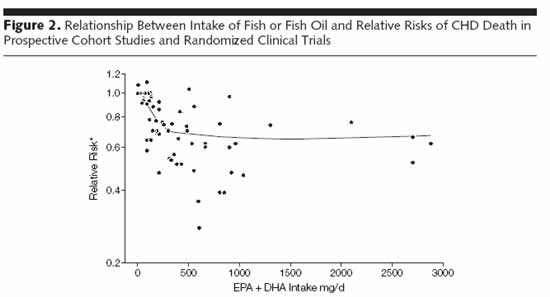
Mozaffarian say Intake of 250 mg/day of EPA and DHA appears sufficient for primary prevention (ie. 2 capsules of Haliborange or 10oz/week of canned tuna or equivalent) See Figure 2 & 6 top of page):-


Modest consumption of fish (eg, 1-2 servings/wk), especially
species higher in the n-3 fatty acids eicosapentaenoic acid (EPA) and docosahexaenoic acid (DHA), reduces risk of coronary death by 36% (95% confidence interval, 20%-50%; P .001) and total mortality by 17% (95% confidence interval, 0%-32%; P=.046) and may favorably affect other clinical outcomes. Intake of 250 mg/day of EPA and DHA appears sufficient for primary prevention.


What is the effect of Omega-3 fatty acids?
Omega-3 FA influence several cardiovascular risk factors and give altered membrane fluidity
and receptor responses following incorporation of (n-3 Poly Unsaturated Fatty Acids
n-3 PUFAs ) into cell membranes and direct binding of n-3 PUFAs to intracellular receptors regulating gene transcription. At typical dietary intakes, antiarrhythmic effects predominate, reducing risk of sudden death and CHD death within weeks by (1) modulation of myocardial sodium and calcium ion channels, reducing susceptibility to ischemia-induced arrhythmia and (2) reduced left ventricular workload and improved myocardial efficiency as a result of reduced heart rate, lower systemic vascular resistance, and improved diastolic filling.

n-3 PUFAs reduced total mortality by 17%. This can be compared to effects of statins on total mortality - a 15% reduction.

Avoidance of modest fish consumption due to confusion regarding risks and benefits could result in thousands of excess CHD deaths annually and suboptimal neurodevelopment in children.

Sunday, 12 December 2010

Could the secret to a longer, healthier life lie in popping a little pill every day?

reposted from: http://www.thetimes.co.uk/tto/health/article2839553.ece

Could the secret to a longer, healthier life really lie in popping a little pill every day? The news this week that taking low-dose aspirin could cut your risk of cancer by a quarter will send plenty of us rushing to the chemist.

Indeed, we are rapidly entering an era where everyone is taking some kind of preventive drug or supplement every day. For drug companies, the potential profits from preventive pills are huge; healthy people make far more sustainable customers than seriously ill ones.

But none of these pills is without its side-effects, and some of these can be serious. It is up to each of us to weigh the risks and benefits.
Aspirin 
This week an Oxford University study revealed that a 75mg aspirin tablet a day substantially cuts death rates from common cancers. The Lancet study found that people taking it had a 25 per cent lower risk of death from cancer and a 10 per cent reduction in death from any cause, compared with patients who were not given the drug. Aspirin is already known to cut the risk of heart attack and stroke among those at increased risk. Professor Peter Rothwell, the lead researcher, is not urging healthy middle-aged adults to start taking aspirin immediately, but he says that the evidence on cancer “tips things towards it being well worth it”. His reticence is due to aspirin’s main side-effect, stomach bleeding.

A British study last year found that daily aspirin can increase the risk of dangerous internal bleeding by a third. It can also cause haemorrhagic strokes.

The complication rate means that if aspirin were submitted today as a new drug to clinical trials, it would fail. Some experts suggest that taking aspirin with milk reduces stomach irritation. Others, such as the scientists behind a review in the Drug and Therapeutics Bulletin, say the drawbacks may outweigh the benefits.

Cod liver oil 
Cod liver oil has been revived in the past decade as a one-a-day golden wonder for healthy hearts, supple joints and sparky brains. Critics have suggested recently that there is a dearth of large-scale study evidence to support this. But in September, doctors at Imperial College London and the Royal Brompton Hospital in London, studied nearly 7,000 people with chronic heart failure and found that 1g of fish oil capsules a day cut the death rate by 9 per cent. Hospital admissions also fell.

A recent study by the University of California may help to explain why: omega-3 fatty acids in the oil switch on receptors in blood that prevent harmful inflammation in the heart and arteries. There are worries about harmful mercury contamination, particularly for pregnant women.

But Dr Jeremy Pearson, of the British Heart Foundation, says: “If people feel they can tolerate fish oil, I don’t think there is any suggestion that they might be doing themselves harm.”

Vitamins 
We spent £398 million on vitamins last year, but there is alarmingly little medical research on them. Most studies say they are of little or no use, especially if you have a normal healthy diet. Some multivitamin supplements can even be dangerous. For example, Swedish researchers warn that an overdose of multivitamins increases the risk of breast cancer.

However, vitamin D shines through. It is essential for healthy bones and to protect against a range of diseases including cancer, heart disease, diabetes and multiple sclerosis. With most of us leading increasingly indoor lives, increasing numbers of us are becoming deficient.

For pregnant mothers, the balance of evidence indicates that taking a multivitamin may benefit their babies. A study in the Clinical Pharmacology & Therapeutics journal found a reduced risk for paediatric brain tumours, neuroblastoma, and leukaemia, though it’s not known why.

Statins 
Statins lower cholesterol levels and have been hailed as wonder drugs. A Lancet study last year said that daily statins cut the risk of strokes by about a fifth. They have also been shown to prevent arteries ageing prematurely. Statins may also protect against arthritis and help the body to combat serious infections by activating bacteria-killing white blood cells.

Such is their promise that more than five million people take them. They were developed for people with high cholesterol, but drug industry-backed research recently concluded that they lower the death risk for everyone, even those with low cholesterol. One British cardiac consultant even said that they should be put in the water supply. This has sparked a huge academic row over accusations of research hype.

Certainly statins can have side-effects, including muscle problems, sexual dysfunction, serious depression, sleep disturbance and memory loss. Critics also fear that people wrongfully believe that statins can enable them to carry on overeating and under-exercising.

Sex hormones 
Some studies estimate that hormone replacement therapy (HRT) extends life by three years because it cuts the risk of heart attack in women by 50 per cent. It also helps to beat osteoporosis. But in 2001 a large study in America showed that HRT considerably increases the risk of breast cancer. After that, use of HRT halved in Britain, to below 20 per cent of menopausal women. But it still has its proponents. Last month Durham University researchers reported that HRT can rejuvenate the brains of women in their fifties and sixties. The general expert consensus is that HRT remains an effective short-term treatment for menopausal symptoms.

The polypill 
The idea of a single pill that wraps up the life-saving benefits of several other preventive drugs was mooted in 2003. Now scientists at Imperial College London are beginning a worldwide trial on it. The two-year trial tests a cheap pill that contains low-dose aspirin, a statin and two drugs to lower blood pressure. The test will see if it can cut heart attacks and strokes in 2,000 people who are thought to be at risk. A trial of one formulation has already proved disappointing at lowering blood pressure. And there is always a chance that a polypill might combine all the bad side-effects with few of the benefits. But researchers hope that within a few years they will have a proven, low-cost formula that millions will be taking every day.

Holy grail 
The ultimate goal of researchers is to find a natural substance (after all aspirin comes from willow bark) that has no side-effects but protects against a primary cause of disease — ageing cells. Scientists thought they had got it in resveratrol, found in grape skins and red wine. Early tests indicated that it may act as a serum of cellular youth, preventing Alzheimer’s in mice. GlaxoSmithKline bought the patent off its developers, then trialled it on cancer patients. But it caused kidney damage and the trial had to be stopped earlier this year. GlaxoSmithKline says it won’t do any further trials.

Never mind, say the seekers of medicine’s ultimate one-a-day holy grail — there are many more natural candidates to try.

Saturday, 6 November 2010

Omega 3

reposted from: http://www.waitrose.com/food/healthandnutrition/healthyeating/varyingyourdiet/knowyournutrients/fatsandomega3.aspx

Omega 3 fats are essential to health. Found mainly in oily fish, they improve heart health and brain function.

The recommended daily intake of essential fatty acids, including Omega 3 and Omega 6, has been set by the Government at six per cent of our dietary energy total.

It has also recommended a weekly Omega 3 target of 1.5g. (1)

Department of Health guidelines state that we should all eat at least two portions of fish every week, and one of those portions should be oily fish, such as salmon or mackerel.

Surveys show that most people currently only eat one third of a portion of oil-rich fish per week (2) and are therefore falling short of the recommended intake and the associated health benefits of Omega 3 fats.


References

1) Dietary Reference Values (DRVs) for Food Energy and Nutrients for the United Kingdom (1991). Report of the panel on DRVs to the Committee on Medical Aspects of Food Policy (COMA).
2) National Diet and Nutrition Survey Adults aged 19 to 64, Volume 1 (2002).

Monday, 8 December 2008

an epidemic of neurological diseases, such as Alzheimer's

Biochemist Gregory Petsko makes a convincing argument that, in the next 50 years, we'll see an epidemic of neurological diseases, such as Alzheimer's, as the world population ages. His solution: more research into the brain and its functions.


Glaucoma is just Alzheimers of the eye.

Friday, 24 October 2008

Avoiding cancer: Top tips from the experts

World class advice on how to sidestep cancer

Cancer special: Expert tips

  • 22 October 2008
  • From New Scientist Print Edition.
Drink green tea

"Breast cancer is the top cancer among women in Singapore. I try to reduce my risk by drinking more green tea and eating more soy-based products. I also steam my tofu with fish since omega-3 fatty acids have been shown to reduce breast-cancer risk. Finally, I try to catch up on sleep because this may reduce my chance of breast cancer too, if our recent findings are true"

Woon-Puay Koh, cancer epidemiologist, National University of Singapore

Take aspirin

"I take a baby aspirin each morning. I eat a largely vegetarian diet, and I am a fanatic, but not totally successful, in trying to keep my weight down. They say that obesity is the second most important risk factor for cancer deaths after tobacco use. I feel increasingly, in the words of the old hippies, that we are what we eat. It's still a throw of the dice, but at least we can tilt the playing field in our favour"

Robert Weinberg, Whitehead Institute for Biomedical Research, Cambridge, Massachusetts, discoverer of the first oncogene

Get screened

"I take low-dose aspirin - it does reduce your risk of colon cancer by about 40 or 50 per cent.
I also abide by all of the screening tests. Unfortunately, a lot of the population can't afford that kind of intervention, so we've got to figure out ways to make some of these tests less costly"

Ray DuBois, M. D. Anderson Cancer Center, Houston, Texas, and president of the American Association for Cancer Research

Eat your greens

"I grew up in Nigeria and that upbringing instilled behaviours that still make good healthy sense. We ate lots of fruits and vegetables and not much red meat. We got exercise, not always by choice. I now have modern conveniences but I still exercise, by choice. And despite my African heritage, I still try to reduce sun exposure"

Funmi Olopade, director of the University of Chicago's Cancer Risk Clinic

Keep your weight down

"I have never smoked, I'm not overweight, I avoid getting sunburnt and I don't drink much alcohol. I also cycle or walk most days. I have been a vegan for over 30 years because I don't like slaughterhouses. But whether this has any effect on cancer risk remains to be seen"

Tim Key of Cancer Research UK's Cancer Epidemiology Unit, University of Oxford

Eat a balanced diet

"There are many nutrients that are thought to be potentially protective for cancer, including vitamin D, selenium, carotenoids, other antioxidants, and specific fatty acids. However, I don't take any dietary supplements because I do not think there is strong evidence that supplements have benefits for cancer beyond the nutrients that would be in a varied and balanced diet"

Kay-Tee Khaw, clinical gerontologist, University of Cambridge

Choose your parents carefully

"I don't smoke, and that's the very best thing anyone can do to avoid cancer. I'm a pale-skinned Scotsman, so I avoid the sun where possible and wear sunblock to avoid melanoma. Another tip would be to choose your parents carefully, to check for inheritable cancers, but that's a bit tricky"

Iain McNeish, medical oncologist, Barts and the London School of Medicine

Think positive

"My advice? Well, don't smoke, eat good green stuff, make very good friends with doctors so that they can snip off the odd mole and do the odd colonoscopy. Also, climb mountains and be very happy and positive the whole time"

David Lane, University of Dundee, UK, who showed that defects in the p53 gene cause a range of cancers

Read more in Cancer special: Old killer, new hope

From issue 2679 of New Scientist magazine, 22 October 2008, page 37