reposted from: Scientific American, September 2010, pg 42-49
stored on my PC: 0910042-kirkwood.pdf
crabsallover
highlights and
key points and
comments
As we grow old, our own cells begin to betray us. By unraveling the mysteries of aging, scientists may be able to make our lives longer and healthier, By Thomas Kirkwood.
The average life span of humans continues to lengthen, and some scientists have begun to ponder whether this trend will continue indefinitely. Not every species ages, and some research suggests that drugs or changes in diet may slow metabolism or alter basic aging processes so that we can live longer. All proposed longevity strategies remain unproved, however. .Scientific American Editors
If you were given a free hand to plan how your life will end—your last weeks, days, hours and minutes—what would you choose? Would you, for example, want to remain in great shape right up until the last minute and then go quickly? Many people say they would choose that option, but I see an important catch. If you are feeling fine one moment, the very last thing you would want is to drop dead the next. And for your loving family and friends, who would suffer instant bereavement, your sudden death would be a cruel loss. On the other hand, coping with a long, drawn-out terminal illness is not great either, nor is the nightmare of losing a loved one into the dark wastes of dementia. We all prefer to avoid thinking about the end of life. Yet it is healthy to ask such questions, at least sometimes, for ourselves and to correctly define the goals of medical policy and research.
It is also important to ask just how far science can help in efforts to cheat death.
We’re Living Longer
it is often said that our ancestors had an easier relationship with death, if only because they saw it so much more often. Just 100 years ago life expectancy was shorter by around 25 years in the West. This literal fact of life resulted because so many children and young adults perished prematurely from a whole variety of causes. A quarter of children died of infection before their fifth birthday; young women frequently succumbed to complications of childbirth; and even a young gardener, scratching his hand on a thorn, might be lost to fatal blood poisoning. Over the course of the past century sanitation and medical care so dramatically reduced death rates in the early and middle years of life that most people now pass away much later, and the population as a whole is older than ever before.
Life expectancy is still increasing worldwide. In the richer countries around the world it lengthens five hours or more every day, and in many developing countries that are catching up the rate quickens still faster.
Today the dominant cause of death is the aging process itself and the various diseases to which it gives rise—whether cancer, which drives cells to proliferate out of control, or Alzheimer’s, at the opposite pole, which causes premature death of brain cells. Until as recently as 1990, demographers predicted confidently that the historical trend of increasing life expectancy would soon cease.
Aging, many researchers believed, was fixed—a process programmed into our biology that resulted in a built-in time of death. No one foresaw the continued increase in life expectancy. It has taken our politicians and planners by surprise. Scientists are still coming to terms with the notion that aging is not fixed, that average life spans have not reached a limit. They change and continue to change, stretched for reasons that we do not fully understand. The declining death rates of the very old are now driving human life expectancy into uncharted territory. If the prevailing certainties about human aging have crumbled, what is left? What does science actually know about the aging process?
Why We Age as We Do
Cells are damaged all the time—DNA gets mutated, proteins get damaged, highly reactive molecules called free radicals disrupt membranes, and the list goes on. Life depends on the continual copying and translation of genetic data, and we know that the molecular machinery handling all these things, excellent as it may be, is not perfect. Considering all these challenges, the immortality of the germ line is actually remarkable. Living cells operate constantly under threat of disruption, and the germ line is not immune. The reason that the germ line does not die out in a catastrophe of errors has to do, on the one hand, with its highly sophisticated mechanisms for cellular self-maintenance and repair and, on the other hand, with its ability to get rid of its more serious mistakes through continual rounds of competition. Sperm are produced in vast excess; usually only a good one can fertilize the egg. Egg-forming cells are produced in much greater numbers than can ovulate; stringent quality control eliminates the ones that fail to make the grade. And finally, if errors slip past all these checks, natural selection provides the final arbiter of which individuals are the fittest to transmit their germ line to future generations.
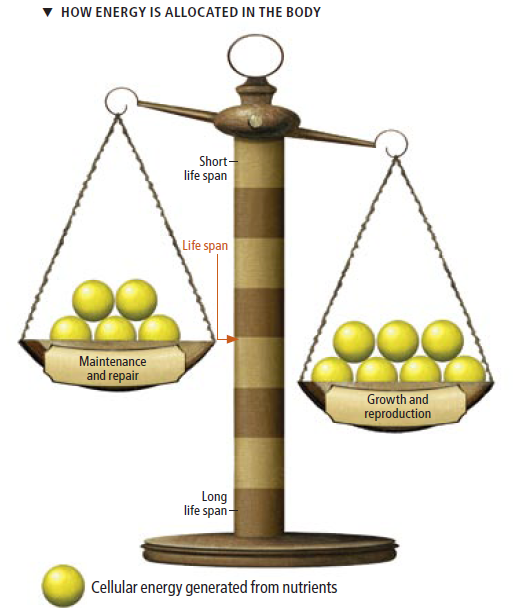
After the seemingly miraculous feat of growing a complex body from a single cell—the fertilized egg—it should be relatively straightforward merely to keep a body going indefinitely—as American evolutionist George Williams has pointed out. Indeed, for some multicelled organisms, an absence of aging appears to be the rule. The freshwater hydra, for example, shows an extraordinary power of survival. Not only does the hydra apparently not age, in the sense that as it gets older it shows no increase in death rate or decline in fertility, it also appears capable of regrowing a whole new body from even a tiny fragment, if by chance it is cut into pieces. The secret of the hydra’s eternal youth: quite simply, germ cells permeate its body. If the immortal germ line is everywhere, it actually comes as no surprise that an individual hydra can survive without any foreseeable end, presuming it does not succumb to injury or predators. In most multicelled animals, however, the germ line is found only in the tissue of the gonads, where the sperm and eggs form. This arrangement provides great advantages. During the long history of evolution, it freed other cell types to become specialists—nerve, muscle and liver cells, among others, that are required for the development of any complex organism, whether a Triceratops or a human. This division of labor had far-reaching consequences for how organisms age and how long they can live. As soon as the specialist cells surrendered the role of continuing the species, they also abandoned any need for immortality; they could die after the body had passed on its genetic legacy through the germ line to the next generation. Ultimate Trad e-offs so how long can those specialist cells survive? In other words, how long can we and other complex organisms live? The answer for any given species has a lot to do with the environmental threats its ancestors faced as they evolved and with the energy costs of maintaining the body in good operating order. By far the majority of natural organisms die at relatively young ages because of accidents, predation, infection or starvation. Wild mice, for example, are at the mercy of a very dangerous environment. They are killed rather quickly—it is rare for a wild mouse to see its first birthday. Bats on the other hand are safer because they can fly. Meanwhile maintenance of the body is expensive, and resources are usually limited. Out of the daily intake of energy, some might go to growth, some to physical work and movement, some to reproduction. Some energy, instead, might be stored as fat to protect against famine, but much gets burned just to fix the innumerable faults that arise every second the organism is alive. Another increment of these scarce resources goes to proofread the genetic code involved in the continual synthesis of new proteins and other essential molecules. And still another allocation powers the energy-hungry garbage disposal mechanisms that clear molecular debris out of the way.

Here is where the disposable soma theory comes in. The theory posits that, like the human manufacturer of an everyday product—a car or a coat, for example—evolving species have to make trade-offs. It does not pay to invest in allowing indefinite survival if the environment is likely to bring death within a fairly predictable time frame. For the species to survive, a genome basically needs to keep an organism in good shape and enable it to reproduce successfully within that time span. At all stages of life, even to its very end, the body does its utmost to stay alive—in other words, it is programmed not for aging and death but for survival. But under the intense pressure of natural selection, species end up placing higher priority on investing in growth and reproduction—in the perpetuation of the species—than on building a body that might last forever. So aging is driven by the gradual lifelong accumulation of diverse forms of unrepaired molecular and cellular damage. No biological software program, then, dictates precisely when it is time to die, but growing evidence suggests that certain genes can nonetheless influence how long we live. Tom Johnson and Michael Klass, working with tiny nematode worms, discovered a gene with such an effect on longevity in the 1980s. Mutation of a gene that the researchers aptly named age-1 produced a 40 percent increase in average life span. Since then, investigators in many laboratories have found numerous other genes capable of increasing nematode life span, and similar mutations have turned up in other animals, from fruit flies to mice. The genes that extend life span mostly alter an organism’s metabolism, the way it uses energy for bodily functions. Often investigators find these genes play a role in the insulin-signaling pathway, pivotal in metabolic regulation. The cascades of molecular interactions constituting this pathway shift the overall level of activity of literally hundreds of other genes responsible for controlling all the intricate processes that carry out cellular maintenance and repair. In effect, it seems that lengthening life span requires changing exactly those processes we know protect the body against buildup of damage. The amount of food available also ratchets metabolism up or down. As long ago as the 1930s, researchers discovered, rather surprisingly, that underfeeding laboratory rodents extends their lives. Once again, modulating metabolism seems to have an effect on the rate of damage accumulation, because mice subjected to dietary restriction increase the activity of a range of maintenance and repair systems. At first glance, it might seem strange that an animal short of food should spend more, not less, energy on bodily maintenance. A period of famine is, however, a bad time to reproduce, and some evidence suggests that during famines certain animals will do better to switch off their fertility, thereby diverting a large fraction of their remaining energy budget to cell maintenance. O f Mice and Men this notion of caloric restriction—and its purported ability to extend longevity—has captured the attention of people who wish to live longer. Humans who go hungry in the hope of a longer life should take note, though, that such a mechanism is much less likely to work for us because our slow-paced metabolism differs greatly from that of organisms in which this strategy has already been tested.

Dramatic extension of life span has indeed been achieved in worms, flies and mice. These animals, with their short-lived, fast-burn biology, have an urgent need to manage their metabolism in a way that adapts rapidly to changing circumstances. In nematode worms, for example, most of the more spectacular effects on life span result from mutations that evolved to allow the worms to switch their development to a stress-resistant form whenever they find themselves in a bad environment and potentially required to make a long trek to find better living conditions. We humans, in any case, may not have the same flexibility in altering our own metabolic control. Immediate metabolic effects, of course, occur in humans who undergo voluntary dietary restriction, but only time—and many hungry years—will tell if these have any beneficial impact on the aging process and, in particular, on longevity.
The goal of gerontology research in humans, however, is always improving health at the end of life, rather than achieving Methuselean life spans. One other thing is also very clear: the longer-lived worms, flies and mice still undergo the aging process. Aging happens because damage still accumulates and in time leads to the breakdown of healthy functions of the body. Therefore, if we want our end to be actually better, we need to look elsewhere. In particular, we need to focus on figuring out how to safely limit or reverse the buildup of damage that leads eventually to age-related frailty, disability and disease. This goal represents a huge challenge and calls for some of the most demanding of today’s interdisciplinary research. No Simple Answers aging is complicated. It affects the body at all levels, from molecules to cells to organs. It also involves multiple kinds of molecular and cellular damage. And although it is true that, in general, this damage accumulates with age and occurs slower in some cell types than in others (depending on the efficiency of the repair systems), injury to any given cell occurs randomly, and the extent can differ even in two cells of the same type in an individual. Thus, all individuals age and die, but the process varies considerably—more confirmation that aging does not stem from a genetic program that specifies how quickly we become frail and die. To understand aging in enough detail to intervene in a suitably targeted fashion that stops or slows the death of selected kinds of cells, we need to know the nature of the molecular defects that drive the aging process at the cellular level. How many of these flaws must accrue before the cell can no longer function? How many defective cells need to accumulate in a given organ before it shows signs of disease? And if we agree that some organs are more important to target than others, how do we deliver the necessary precision? It may be possible to combat aging by altering important mechanisms that cells use to counteract the buildup of damage. One way that a cell responds to too much wear and tear is simply to kill itself. At one time, scientists viewed this cellular suicide process, technically called apoptosis, as evidence that aging adheres to a genetic program. In aged tissues the frequency of cells killing themselves increases, and this process does indeed contribute to aging. But we now know that apoptosis acts chiefly as a survival mechanism that protects the larger body from injured cells that could potentially cause trouble, notably, ones that have become malignant. Apoptosis happens more in old organs because their cells have suffered more insults. Remember, though, that in nature animals rarely live long enough to grow old. Apoptosis evolved to deal with damaged cells in younger organs, when many fewer would need to be eliminated. If too many cells die, an organ fails or becomes debilitated. So apoptosis is good and bad—good when it deletes potentially dangerous cells, bad when it deletes too many. Nature cares more about survival of the young than managing decline in old age, so not all apoptosis might be strictly necessary in our later years. In some diseases, such as stroke, researchers hope that by suppressing apoptosis in the less damaged tissue, the resulting loss of cells may be reduced, thereby aiding recovery. Instead of dying, hurt cells that are normally able to reproduce may take a less extreme course and simply stop dividing, a fate known as replicative senescence. Fifty years ago Leonard Hayflick, now at the University of California, San Francisco, discovered that cells tend to divide a set number of times—now called the Hayflick limit—and then stop. Later work showed that they often stop dividing when the caps, or telomeres, that protect the ends of chromosomes erode too much. But other details of how cell senescence sets in remained obscure. Recently, though, my colleagues and I have made an exciting discovery. We found that each cell has highly sophisticated molecular circuitry that monitors the level of damage both in its DNA and in its energy-forming units known as mitochondria. When the amount of damage passes some threshold, the cell locks itself into a state where it can still perform useful functions in the body but can never divide again. As with apoptosis, nature’s bias toward the survival of the young probably means that not all these lockdowns are strictly necessary. But if we are to unpick the locks and so restore some division capacity to aged cells, without unleashing the threat of cancer, we need to understand very thoroughly just how cell senescence works. The demanding science needed to make this discovery required a multidisciplinary team, including molecular biologists, biochemists, mathematicians and computer scientists, as well as state-of-the-art instruments for imaging the damage in living cells. Where such discoveries might lead we do not yet know, but it is through studies of this kind that we can hope to identify novel drugs able to combat age-related diseases in completely new ways and thereby shorten the period of chronic illness experienced at the end of life.
The difficulty of this type of basic research means that many years, perhaps decades, may pass before these drugs come to market. Using the science of aging to improve the end of life represents a challenge, perhaps the greatest yet to face medical science. Solutions will not come easily, despite the claims made by the merchants of immortality who assert that caloric restriction or dietary supplements, such as resveratrol, may allow us to live longer. The greatest human ingenuity will be needed to meet this challenge. I believe we can and will develop treatments targeted at easing our final years. But when the end arrives, each of us.alone.will need to come to terms with our own mortality. All the more reason then to focus on living.on making the most of the time of our lives, because no magic elixir will save us. ¡
More To Explore
- How and Why We Age. Leonard Hayflick. Ballantine Books, 1994.
- Understanding Ageing. Robin Holliday. Cambridge University Press, 1995.
- Why We Age: What Science Is Discovering about the Bodys Journey through Life. Steven N. Austad. John Wiley and Sons, 1999.
- U nderstanding Ageing from an Evolutionary Perspective. T. B. Kirkwood in Journal of Internal Medicine, Vol. 263, No. 2, pages 117.127; February 2008.
- The End of Age. Thomas Kirkwood. BBC Reith Lectures. www.bbc.co.uk/radio4/reith2001
Comment on this article at www.ScientificAmerican.com/TheEnd


 Mitochondria, organelles on the right, interact with the cell's nucleus to ensure a healthy, functioning cell. Image by Ana Gomes
 Sirt1 protein, red, circles the cell's chromosomes, blue. Image by Ana GomesAna Gomes, a postdoctoral scientist in the Sinclair lab, had been studying mice in which thisSIRT1 gene had been removed. While they accurately predicted that these mice would show signs of aging, including mitochondrial dysfunction, the researchers were surprised to find that most mitochondrial proteins coming from the cell’s nucleus were at normal levels; only those encoded by the mitochondrial genome were reduced.
 When Sirt1 loses its ability to monitor HIF-1, communication between mitochondria and the nucleus breaks down, and aging accelerates. Image by Ana Gomes