reposted from: Oily fish may reduce risk of rheumatoid arthritis - Health News - NHS Choices
crabsallover highlights, key points, comments / links.
"Eating fish could halve risk of arthritis" is the encouraging news in The Guardian, as a Swedish study found that women who regularly ate high levels of oily fish were less likely to develop rheumatoid arthritis.
This seem to strengthen the Government advice to eat one portion of oily fish and one portion of white fish a week: 'A healthy diet should include at least two portions of fish a week, including one of oily fish.'
Researchers asked women about their diet at two time points a decade apart to assess their intake of long-chain n-3 polyunsaturated fatty acids (omega-3 fatty acids). The researchers then followed up the women six years after their diet was last assessed to see if they had developed rheumatoid arthritis. They found that women whose dietary intake of omega-3 fatty acids consistently exceeded 0.21g per day at both time points had a 52% decreased risk of rheumatoid arthritis compared with women who consistently reported a dietary intake of 0.21g per day or less.
This corresponds to at least one serving of oily fish a week, or four servings a week of lean fish, such as cod. However, the way this study was carried out means that it can't prove that eating fish directly prevented women developing rheumatoid arthritis. Despite this, there are many health benefits from regularly eating oily fish, including a reduced risk of cardiovascular disease.
An intake of n-3 PUFAs of more than 0.21g per day (reported on the food frequency questionnaire in 1997) was associated with a 35% decreased risk of developing rheumatoid arthritis compared with a lower intake (adjusted relative risk [RR] 0.65; 95% confidence interval [CI] 0.48-0.90). The researchers calculated that 28% of rheumatoid arthritis cases could be avoided if everyone had an intake of more than 0.21g n-3 PUFAs per day. They also found that higher dietary intakes of n-3 PUFAs further reduced the risk of rheumatoid arthritis until an intake of 0.35g per day was reached. After this level, no additional benefit was seen with a higher intake. When women consistently reported an intake exceeding 0.21g per day (both in 1987 and 1997), this was associated with a 52% (95% CI 29-67%) decreased risk of rheumatoid arthritis compared with women who consistently reported a dietary intake of 0.21g per day or less.
The researchers conclude that in this study, they have observed a "statistically significant inverse association between intake of dietary long-chain n-3 polyunsaturated fatty acids and rheumatoid arthritis". They go on to suggest that "moderate consumption of fish is sufficient to reduce risk of diseases".
This is a well-designed cohort study that found an association between an increased dietary intake of long-chain n-3 polyunsaturated fatty acids and a reduced risk of rheumatoid arthritis in a cohort of middle-aged and older women in Sweden. This study has many strengths, including: it was prospective, meaning that information was collected as the study was being performed it used a large sample of women taken from the general population diet was assessed at two time points, both long before rheumatoid arthritis was diagnosed But because this is a cohort study, we cannot conclude from its results that dietary long-chain n-3 polyunsaturated fatty acids are directly responsible for the reduction in risk seen. This is because of the confounding factors that could also potentially be responsible for the association seen. Although the researchers adjusted their analyses for the lifestyle factors of smoking and alcohol intake, which are associated with the risk of rheumatoid arthritis, it is possible that people who eat a healthier diet that includes more fatty acids could also have other healthy lifestyle behaviours. This could include having a healthier diet overall (such as a diet with plenty of fruit and vegetables and low in saturated fats) and taking more regular exercise. In addition, this study provides no information about whether dietary intake of long-chain n-3 polyunsaturated fatty acids is associated with a reduced risk of rheumatoid arthritis in men or younger women. Further studies are required to confirm whether long-chain n-3 polyunsaturated fatty acids really do reduce your risk of developing rheumatoid arthritis. However, it is currently recommended that people should aim to eat at least two portions of fish a week, including one portion of oily fish. Babies, children and women who are pregnant, breastfeeding or planning to have children should have no more than two portions of oily fish a week. Eating this amount of fish would provide more than 0.21g of long-chain n-3 polyunsaturated fatty acids, which was the level associated with a reduction in the risk of developing rheumatoid arthritis.
"Eating fish could halve risk of arthritis" is the encouraging news in The Guardian, as a Swedish study found that women who regularly ate high levels of oily fish were less likely to develop rheumatoid arthritis.
This seem to strengthen the Government advice to eat one portion of oily fish and one portion of white fish a week: 'A healthy diet should include at least two portions of fish a week, including one of oily fish.'
Researchers asked women about their diet at two time points a decade apart to assess their intake of long-chain n-3 polyunsaturated fatty acids (omega-3 fatty acids). The researchers then followed up the women six years after their diet was last assessed to see if they had developed rheumatoid arthritis. They found that women whose dietary intake of omega-3 fatty acids consistently exceeded 0.21g per day at both time points had a 52% decreased risk of rheumatoid arthritis compared with women who consistently reported a dietary intake of 0.21g per day or less.
This corresponds to at least one serving of oily fish a week, or four servings a week of lean fish, such as cod. However, the way this study was carried out means that it can't prove that eating fish directly prevented women developing rheumatoid arthritis. Despite this, there are many health benefits from regularly eating oily fish, including a reduced risk of cardiovascular disease.
What were the basic results?
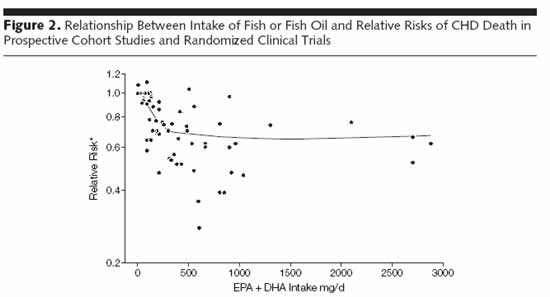
An intake of n-3 PUFAs of more than 0.21g per day (reported on the food frequency questionnaire in 1997) was associated with a 35% decreased risk of developing rheumatoid arthritis compared with a lower intake (adjusted relative risk [RR] 0.65; 95% confidence interval [CI] 0.48-0.90). The researchers calculated that 28% of rheumatoid arthritis cases could be avoided if everyone had an intake of more than 0.21g n-3 PUFAs per day. They also found that higher dietary intakes of n-3 PUFAs further reduced the risk of rheumatoid arthritis until an intake of 0.35g per day was reached. After this level, no additional benefit was seen with a higher intake. When women consistently reported an intake exceeding 0.21g per day (both in 1987 and 1997), this was associated with a 52% (95% CI 29-67%) decreased risk of rheumatoid arthritis compared with women who consistently reported a dietary intake of 0.21g per day or less.
How did the researchers interpret the results?
The researchers conclude that in this study, they have observed a "statistically significant inverse association between intake of dietary long-chain n-3 polyunsaturated fatty acids and rheumatoid arthritis". They go on to suggest that "moderate consumption of fish is sufficient to reduce risk of diseases".
Conclusion
This is a well-designed cohort study that found an association between an increased dietary intake of long-chain n-3 polyunsaturated fatty acids and a reduced risk of rheumatoid arthritis in a cohort of middle-aged and older women in Sweden. This study has many strengths, including: it was prospective, meaning that information was collected as the study was being performed it used a large sample of women taken from the general population diet was assessed at two time points, both long before rheumatoid arthritis was diagnosed But because this is a cohort study, we cannot conclude from its results that dietary long-chain n-3 polyunsaturated fatty acids are directly responsible for the reduction in risk seen. This is because of the confounding factors that could also potentially be responsible for the association seen. Although the researchers adjusted their analyses for the lifestyle factors of smoking and alcohol intake, which are associated with the risk of rheumatoid arthritis, it is possible that people who eat a healthier diet that includes more fatty acids could also have other healthy lifestyle behaviours. This could include having a healthier diet overall (such as a diet with plenty of fruit and vegetables and low in saturated fats) and taking more regular exercise. In addition, this study provides no information about whether dietary intake of long-chain n-3 polyunsaturated fatty acids is associated with a reduced risk of rheumatoid arthritis in men or younger women. Further studies are required to confirm whether long-chain n-3 polyunsaturated fatty acids really do reduce your risk of developing rheumatoid arthritis. However, it is currently recommended that people should aim to eat at least two portions of fish a week, including one portion of oily fish. Babies, children and women who are pregnant, breastfeeding or planning to have children should have no more than two portions of oily fish a week. Eating this amount of fish would provide more than 0.21g of long-chain n-3 polyunsaturated fatty acids, which was the level associated with a reduction in the risk of developing rheumatoid arthritis.